The South African Civil Society Information Service
A nonprofit news agency promoting social justice. Seeking answers to the question:
How do we make democracy work for the poor?
A nonprofit news agency promoting social justice. Seeking answers to the question:
How do we make democracy work for the poor?

With great sadness, the South African Civil Society Information Service announces its closure. We will no longer be publishing articles on our website, but it will remain live for you to access, as it has developed into an extensive archive of progressive views and information. The decision to close SACSIS wasn't taken lightly. We were forced into it due to a lack of funding support. We thank you for your interest in our views and leave you with this message: Never stop searching for ways to make this world a kinder place for all who live in it.
 Richard Pithouse -
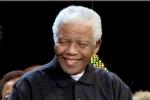
In the midst of the state of emergency, Johnny Clegg's exquisite song for Nelson Mandela, Asimbonanga, soared above the blood and teargas. The song seemed to suggest that Mandela could take us across the burning water. Mandela did return from Robben Island. And while the sun didn't rise red on the day of his return and the dead didn't arise to make the world whole, time seemed to stand still as he returned to the embrace of a mass movement. There are critiques of how this delicate moment was handled. But it is clear that the wheel of history did turn in 1994 and that Mandela did take us across the burning water.
Richard Pithouse -
In the midst of the state of emergency, Johnny Clegg's exquisite song for Nelson Mandela, Asimbonanga, soared above the blood and teargas. The song seemed to suggest that Mandela could take us across the burning water. Mandela did return from Robben Island. And while the sun didn't rise red on the day of his return and the dead didn't arise to make the world whole, time seemed to stand still as he returned to the embrace of a mass movement. There are critiques of how this delicate moment was handled. But it is clear that the wheel of history did turn in 1994 and that Mandela did take us across the burning water.
 Saliem Fakir -
Current notions of the market and economy tend to put an inconvenient cover on the market's workings, especially the role of corporations in the dynamics of the market. A new lens is required to unpack what corporations are, how their influence works and what their impact is on markets and the politics between states and citizens. We must move away from the mundane idea that corporate success is the result of a single ingenious entrepreneur, hard work, innovation and tenacity. This is pure fiction.
Saliem Fakir -
Current notions of the market and economy tend to put an inconvenient cover on the market's workings, especially the role of corporations in the dynamics of the market. A new lens is required to unpack what corporations are, how their influence works and what their impact is on markets and the politics between states and citizens. We must move away from the mundane idea that corporate success is the result of a single ingenious entrepreneur, hard work, innovation and tenacity. This is pure fiction.
 Steven Friedman -
South Africa's real 'ticking time bomb' may not be poverty, but what it has always been - race. Our angriest people may not be those forced to survive on much less than they need, but the black middle class. The frequently heard claim that poor people are about to rise up and destroy the economy ignores reality: poverty forces people to be more pragmatic because more is at stake. The poor are not yet organised enough and too isolated from economic power to change society. Middle class people, by contrast, can organise and make themselves heard. And, if middle class people are black, they may be very angry.
Steven Friedman -
South Africa's real 'ticking time bomb' may not be poverty, but what it has always been - race. Our angriest people may not be those forced to survive on much less than they need, but the black middle class. The frequently heard claim that poor people are about to rise up and destroy the economy ignores reality: poverty forces people to be more pragmatic because more is at stake. The poor are not yet organised enough and too isolated from economic power to change society. Middle class people, by contrast, can organise and make themselves heard. And, if middle class people are black, they may be very angry.
 Fazila Farouk -
People correctly argue that we need to create jobs for the masses of unemployed South Africans. But before we rush out to expand our burgeoning collection of rock drillers, petrol pump attendants, garden boys and kitchen girls; let us first consider what kind of society we are building. Our energies ought to be directed at investing in our people's skills so that they can participate in an emerging new post-capitalist hybrid economy that is being driven by the internet, high productivity and intense collaboration. But in order to participate in it, South Africa will first have to address its economic inequality and hierarchy of social division.
Fazila Farouk -
People correctly argue that we need to create jobs for the masses of unemployed South Africans. But before we rush out to expand our burgeoning collection of rock drillers, petrol pump attendants, garden boys and kitchen girls; let us first consider what kind of society we are building. Our energies ought to be directed at investing in our people's skills so that they can participate in an emerging new post-capitalist hybrid economy that is being driven by the internet, high productivity and intense collaboration. But in order to participate in it, South Africa will first have to address its economic inequality and hierarchy of social division.
 Jane Duncan -
For as long as South Africa has a Constitution that can only tinker at the margins of the problem of poverty and inequality, the document and its institutions remain vulnerable to attack. The South African Constitution extends formal political participation rights to formerly disenfranchised black people while cementing political agreements that left white control of the economy largely intact. To the extent that it cements these agreements, then the current Constitutional framework is not sustainable. Under these conditions, it should surprise no one if rights talk is experienced by many black people as a strategy by white people to maintain their privileges.
Jane Duncan -
For as long as South Africa has a Constitution that can only tinker at the margins of the problem of poverty and inequality, the document and its institutions remain vulnerable to attack. The South African Constitution extends formal political participation rights to formerly disenfranchised black people while cementing political agreements that left white control of the economy largely intact. To the extent that it cements these agreements, then the current Constitutional framework is not sustainable. Under these conditions, it should surprise no one if rights talk is experienced by many black people as a strategy by white people to maintain their privileges.
 Glenn Ashton -
Over the course of the past century our food supply has shifted from local to global. Most food our grandparents ate was grown regionally, often by neighbourhood farmers. Today our food comes from across the world. More importantly, it is often produced in highly destructive ways, at the lowest possible cost. In today's world, we cut and clear the lungs of the world, our tropical rainforests, to feed livestock or grow dishonestly named "biofuels". At the same time, we bulldoze natural filtration systems and the nurseries for life like wetlands and mangrove swamps to produce luxury foods for obese populations.
Glenn Ashton -
Over the course of the past century our food supply has shifted from local to global. Most food our grandparents ate was grown regionally, often by neighbourhood farmers. Today our food comes from across the world. More importantly, it is often produced in highly destructive ways, at the lowest possible cost. In today's world, we cut and clear the lungs of the world, our tropical rainforests, to feed livestock or grow dishonestly named "biofuels". At the same time, we bulldoze natural filtration systems and the nurseries for life like wetlands and mangrove swamps to produce luxury foods for obese populations.
 Leonard Gentle -
The story of Marikana runs much deeper than an inter-union spat. The broader platinum belt has been home to a series of new upsurges of struggle in the last five years. From the working class community activists of Merafong and Khutsong to the striking workers of Angloplat, Implat and now Lonmin, these struggles, including the nationwide "service delivery" revolts, are a sign that a new movement is being forged. Rather than just howl our outrage, it is time to take sides and offer our support.
Leonard Gentle -
The story of Marikana runs much deeper than an inter-union spat. The broader platinum belt has been home to a series of new upsurges of struggle in the last five years. From the working class community activists of Merafong and Khutsong to the striking workers of Angloplat, Implat and now Lonmin, these struggles, including the nationwide "service delivery" revolts, are a sign that a new movement is being forged. Rather than just howl our outrage, it is time to take sides and offer our support.

 Watch -
SACSIS spoke to renowned author and social commentator, Prof. Sampie Terreblanche, who's spent years researching South Africa's inequality. We talk to him about the history of South Africa's transition with a particular focus on the role of big capital in the transition to democracy as well as prospects for change in the future. Terreblanche argues that the ANC's embrace of the neoliberal approach for economic development is the wrong model for South Africa. He also notes that White South Africans occupy an extremely privileged position in this country and argues that if the situation of the bottom 50% of South Africa's population is going to change, then Whites will have to make a sacrifice. "There is no other way," he contends.
Watch -
SACSIS spoke to renowned author and social commentator, Prof. Sampie Terreblanche, who's spent years researching South Africa's inequality. We talk to him about the history of South Africa's transition with a particular focus on the role of big capital in the transition to democracy as well as prospects for change in the future. Terreblanche argues that the ANC's embrace of the neoliberal approach for economic development is the wrong model for South Africa. He also notes that White South Africans occupy an extremely privileged position in this country and argues that if the situation of the bottom 50% of South Africa's population is going to change, then Whites will have to make a sacrifice. "There is no other way," he contends.
 Watch -
Talking about the nationalisation debate in relation to the mining industry in South Africa, BEE expert, Duma Gqubule, explains that the value of untapped mineral resources in South Africa is US$4.7 trillion. Put differently, the value of these mineral resources is worth one million Rand per South African citizen. The mistake our country made in relation to BEE was to set a target of 25% for black people. By definition, a black empowerment transaction will only benefit a few black people. There has to be more that you take from this industry for the country as a whole, he contends.
Watch -
Talking about the nationalisation debate in relation to the mining industry in South Africa, BEE expert, Duma Gqubule, explains that the value of untapped mineral resources in South Africa is US$4.7 trillion. Put differently, the value of these mineral resources is worth one million Rand per South African citizen. The mistake our country made in relation to BEE was to set a target of 25% for black people. By definition, a black empowerment transaction will only benefit a few black people. There has to be more that you take from this industry for the country as a whole, he contends.
 Watch -
They are important drivers of the South African economy, yet domestic workers are still amongst the lowest paid workers today. Their fate was sealed during the apartheid era when "kitchen girls" were just servants with no workplace rights. Little has changed in post-apartheid South Africa argues Myrtle Witbooi, the general secretary of South Africa's domestic workers' union. Domestic work is not considered decent work. Poor enforcement of laws and regressive employer attitudes mean that domestic workers' rights are being quietly violated every day.
Watch -
They are important drivers of the South African economy, yet domestic workers are still amongst the lowest paid workers today. Their fate was sealed during the apartheid era when "kitchen girls" were just servants with no workplace rights. Little has changed in post-apartheid South Africa argues Myrtle Witbooi, the general secretary of South Africa's domestic workers' union. Domestic work is not considered decent work. Poor enforcement of laws and regressive employer attitudes mean that domestic workers' rights are being quietly violated every day.
 Watch -
In the face of compelling evidence against coal and nuclear energy, our government's response to SA's electricity crisis is to continue building coal-fired power stations and an expensive nuclear power plant. A crisis is one of the best ways to catalyse short-termism it was argued at an event examining the energy crisis - and our government's "quick fix" for the crisis (coal, gas, nuclear) is a false solution, which goes against international trends. But the public fed on propaganda from the fossil fuel lobby is completely panicked about power outages, leading to silence on these false solutions.
Watch -
In the face of compelling evidence against coal and nuclear energy, our government's response to SA's electricity crisis is to continue building coal-fired power stations and an expensive nuclear power plant. A crisis is one of the best ways to catalyse short-termism it was argued at an event examining the energy crisis - and our government's "quick fix" for the crisis (coal, gas, nuclear) is a false solution, which goes against international trends. But the public fed on propaganda from the fossil fuel lobby is completely panicked about power outages, leading to silence on these false solutions.
 Watch -
Speaking at an event hosted by SACSIS and the Friedrich Ebert Foundation to examine the impact of traditional leadership on rural land reform, analyst Nomboniso Gasa, posited that there's a new form of dispossession taking place in South Africa, as untapped mineral resources influence a new round of land claims by the rural elite. Land expert, Prof. Ben Cousins, said that this land grab by traditional leaders is taking place with the connivance of government. This quest for mineral rights by traditional authorities will mire rural women in on-going poverty.
Watch -
Speaking at an event hosted by SACSIS and the Friedrich Ebert Foundation to examine the impact of traditional leadership on rural land reform, analyst Nomboniso Gasa, posited that there's a new form of dispossession taking place in South Africa, as untapped mineral resources influence a new round of land claims by the rural elite. Land expert, Prof. Ben Cousins, said that this land grab by traditional leaders is taking place with the connivance of government. This quest for mineral rights by traditional authorities will mire rural women in on-going poverty.
 Watch -
As Numsa gears up for the launch of its United Front, SACSIS and Norwegian People’s Aid recently hosted a panel discussion that examined the relationship between labour and civil society in the struggle for social justice. While Numsa is doing pioneering work in South Africa, international examples of labour/civil society partnerships are not uncommon. International speakers on our panel talked about their experiences of these partnerships. Although many challenges must still be overcome, the importance of labour and civil society joining forces is indisputable. As one speaker put it, the struggle against elites is a political struggle that requires a new political mass movement.
Watch -
As Numsa gears up for the launch of its United Front, SACSIS and Norwegian People’s Aid recently hosted a panel discussion that examined the relationship between labour and civil society in the struggle for social justice. While Numsa is doing pioneering work in South Africa, international examples of labour/civil society partnerships are not uncommon. International speakers on our panel talked about their experiences of these partnerships. Although many challenges must still be overcome, the importance of labour and civil society joining forces is indisputable. As one speaker put it, the struggle against elites is a political struggle that requires a new political mass movement.
 Watch -
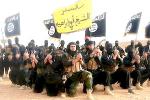
Against the backdrop of a South African couple liquidating their assets to travel to Iraq to join the extremist Islamist organisation, the Islamic State, which has established a caliphate in northern Iraq and Syria that it governs by sharia law, SACSIS caught up with Middle East expert, Na'eem Jeenah and put the question to him: "What would it take to defeat ISIS?" Jeenah contends that it will take more than a military response. What is needed to properly defeat ISIS is an ideological battle and Muslims themselves need to take the lead in challenging ISIS' theological arguments.
Watch -
Against the backdrop of a South African couple liquidating their assets to travel to Iraq to join the extremist Islamist organisation, the Islamic State, which has established a caliphate in northern Iraq and Syria that it governs by sharia law, SACSIS caught up with Middle East expert, Na'eem Jeenah and put the question to him: "What would it take to defeat ISIS?" Jeenah contends that it will take more than a military response. What is needed to properly defeat ISIS is an ideological battle and Muslims themselves need to take the lead in challenging ISIS' theological arguments.